
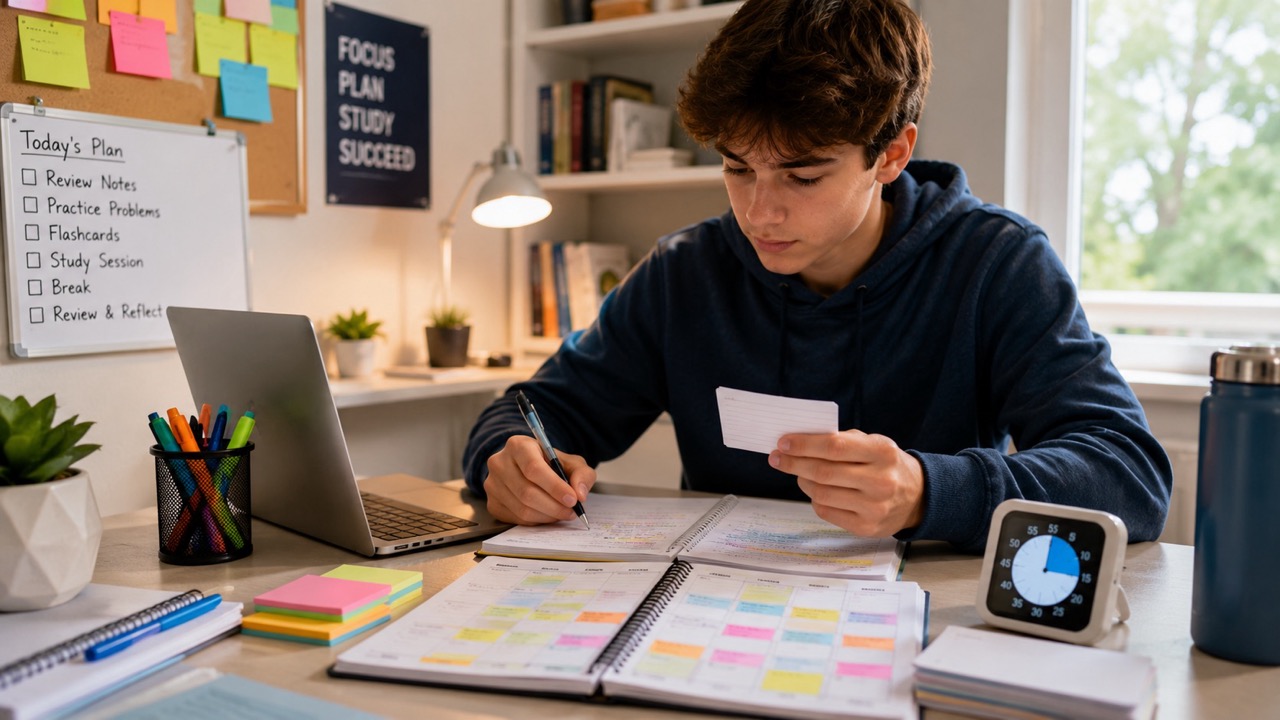
Study Skills and Productivity Strategies Every Teen Should Learn
Most teens are not struggling because they are lazy or unmotivated. They are struggling because no one ever taught them how to study effectively. Sitting at a desk with a textbook open is not a study strategy. It is just being present in the same room as information. Real study skills change how a teen processes, retains, and applies what they learn.
Productivity strategies go even further by organizing how a teen manages their time and energy. Together, these two skill sets create students who work smarter, not just longer. This blog walks through what actually works and why it matters beyond test scores.
Why Most Teens Struggle With Studying
School teaches subjects but rarely teaches how to learn. Teens sit through years of content delivery without ever learning what to do with it. The result is a student who reads chapters without absorbing them and highlights without understanding why. Add social media, notifications, and packed schedules to the mix, and focus becomes genuinely difficult.
According to research from the American Psychological Association, academic pressure is one of the top stressors for teenagers in the United States. Yet very few schools formally address the skills that would actually reduce that pressure. Study skills and productivity strategies fill that gap directly.
The Difference Between Studying and Learning
Studying means sitting with material. Learning means processing it well enough to retrieve and use it later. A teen can study for three hours and learn very little if the method is passive. Passive studying includes rereading notes, highlighting text, and staring at flashcards without active recall.
Active studying involves retrieving information from memory, connecting it to other concepts, and applying it in different contexts. The shift from passive to active studying is one of the highest-impact changes a teen can make. It saves time and produces stronger, longer-lasting results.
Core Study Skills Every Teen Should Build
Studying longer does not always lead to better results. The right study techniques can help teens learn more effectively, stay focused, and remember information longer. These proven strategies build stronger learning habits and support success in school and beyond.
Active Recall Over Passive Review
Active recall means testing yourself on material before you feel ready. Close the book, look away from the notes, and try to write down everything you remember. This technique forces the brain to retrieve information rather than simply recognize it.
Recognition feels easier but produces weaker memory. Retrieval feels harder but builds knowledge that actually sticks. A teen who practices active recall for 20 minutes outperforms one who passively reviews for an hour.
Spaced Repetition
Spaced repetition means reviewing material across multiple sessions spread over time. Studying the same topic for four hours the night before a test is called massed practice. Massed practice produces short-term familiarity and long-term forgetting.
Spacing out shorter sessions over several days produces real retention. Free tools like Anki use spaced repetition algorithms to schedule review sessions based on memory science. Teens who build this habit early carry a significant academic advantage into college.
The Pomodoro Technique for Focus
The Pomodoro Technique breaks study sessions into 25-minute focused blocks. After each block, a five-minute break follows. After four blocks, a longer break of 15 to 30 minutes resets the brain. This structure works because it removes the pressure of open-ended studying. A teen who knows a break is coming in 25 minutes finds it easier to stay focused right now. It also prevents the mental fatigue that makes studying feel impossible after the first hour.
Note-Taking That Actually Works
Most teens write down everything a teacher says. That approach produces pages of notes that are difficult to review and harder to understand. The Cornell Note-Taking System divides each page into three sections: notes, cues, and a summary.
During class, teens write main ideas in the notes column. After class, they write questions or keywords in the cue column. At the bottom, a short summary captures the key point in their own words. This method builds comprehension during note-taking rather than leaving it all for later.
Productivity Strategies That Actually Move the Needle
Planning the Week Before It Starts
Most teens react to their week instead of designing it. Sunday planning sessions change that pattern completely. A teen who spends 15 minutes on Sunday writing out every assignment, deadline, and commitment enters the week with clarity. That clarity reduces the mental overhead of remembering everything, which frees up cognitive space for actual thinking. A simple paper planner or a free tool like Google Calendar works well for this habit.
Prioritizing by Impact, Not by Ease
Many teens start with the easiest tasks because it feels productive. Crossing small things off a list creates momentum but leaves the most important work untouched. A better approach is to identify the one or two tasks that will have the biggest impact on outcomes. Do those first, when mental energy is highest. Save lower-effort tasks for the end of the day when focus naturally dips.
Eliminating Decision Fatigue
Decision fatigue is real and it affects teens significantly. Every small decision throughout the day drains mental energy away from important work. Teens who reduce unnecessary decisions, like planning meals, outfits, and schedules in advance, protect their cognitive resources. This energy can then go toward studying, problem-solving, and creative thinking instead.
Creating a Dedicated Study Environment
Where a teen studies matters more than most people realize. A bed signals sleep to the brain, not focus. A couch signals relaxation, not concentration. A consistent, dedicated study space trains the brain to shift into work mode when the teen sits down. This space does not need to be elaborate but it does need to be free from entertainment distractions. Phone in another room, notifications off, and a clear desk make a measurable difference in focus quality.
Managing Distractions Without Willpower
Relying on willpower to resist distractions is a losing strategy for most teens. Willpower depletes over the course of the day and is at its lowest when homework usually happens. A smarter approach is to design the environment so that distractions require effort to access.
- Put the phone in another room rather than flipping it face down.
- Use apps like Freedom or Cold Turkey to block distracting websites during study sessions.
- Tell family members or roommates that a specific window of time is off-limits for interruptions.
These structural changes produce better results than any amount of self-discipline fighting alone.
The Role of Sleep, Movement, and Nutrition
Study skills operate inside a biological system. A teen who sleeps five hours and eats poorly is working against their own brain. The National Sleep Foundation recommends 8 to 10 hours of sleep per night for teenagers.
Sleep is when the brain consolidates memory and clears out metabolic waste. A teen who studies well but sleeps poorly retains far less than one who does both. Physical movement also increases blood flow to the prefrontal cortex, which drives focus and decision-making. Even a 10-minute walk before a study session improves cognitive performance noticeably. These are not optional lifestyle choices and they are foundational to how effectively a teen can study at all.
Accountability Makes Everything Stick Faster
A teen who applies one study strategy this week will likely forget it by next week without accountability. Accountability creates the external structure that habits need to form and hold. Study partners, mentors, and structured programs all provide this in different ways. A study partner creates peer accountability and makes sessions feel less isolating.
A mentor provides perspective, feedback, and encouragement beyond what peers can offer. KDA Foundation’s teen productivity and focus coaching programs help students build exactly these habits through guided daily challenges and consistent mentor support. Teens who work with mentors build stronger habits faster than those navigating it alone.
Building the Full Picture With KDA Foundation
Study skills and productivity strategies do not exist in isolation. They connect to confidence, goal-setting, career readiness, and long-term personal development.
KDA Foundation’s daily programs help teens build all of these areas through structured daily challenges, real mentorship, and community support. The Dreamer Box adds hands-on tools and wellness resources that support a teen’s focus and momentum outside the classroom. As KDA Centers expand across Florida, teens also gain access to in-person workshops where these skills are practiced in real-world settings.
One Skill at a Time, Starting Today
The teens who build strong study habits early are not smarter than their peers. They simply have better tools and better support. Pick one strategy from this blog and apply it this week.
Active recall, spaced repetition, a Sunday planning session, or a dedicated study space each produces real results when practiced with intention. Study skills and productivity strategies are learnable by any teen willing to try.
KDA Foundation is here to support that process every step of the way.
Contact Information: