
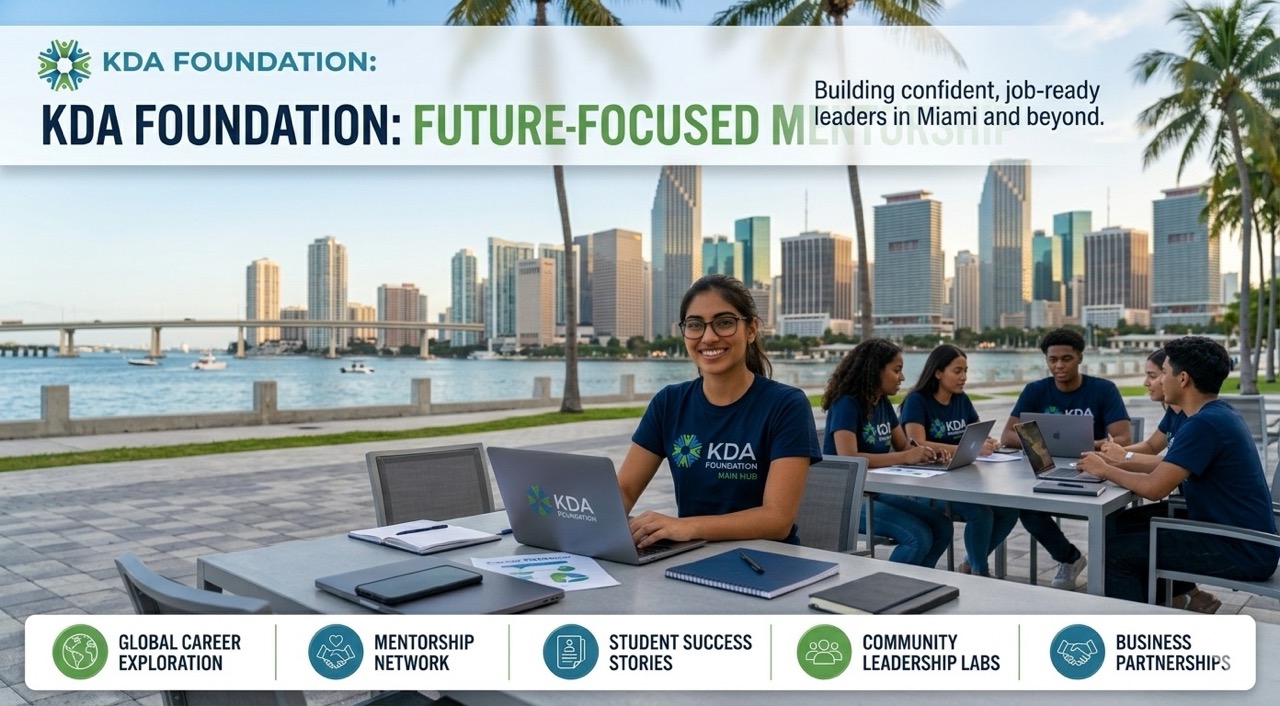
Youth Leadership and Professional Development Programs in Miami
Morning traffic near Brickell Avenue, Coral Way, and Biscayne Boulevard often reflects the fast pace of life that many Miami students experience every day. Teenagers across neighborhoods like Kendall, Little Havana, North Miami, and Coral Gables balance school responsibilities, social pressure, athletics, part-time work, and future planning at the same time. Many students hear constant conversations about success and leadership, yet very few receive structured guidance that teaches them how to build confidence, communicate professionally, and prepare for long-term opportunities.
KDA Foundation focuses on helping young people develop leadership habits, accountability, communication skills, and career awareness through structured mentorship systems. Miami youth mentorship & leadership training gives students opportunities to practice real-world leadership skills instead of simply hearing motivational advice. Students benefit from mentorship environments that connect personal growth with practical decision-making, teamwork, goal tracking, and future readiness.
This page explains why mentorship matters during adolescence, how leadership training shapes long-term development, and why Miami families increasingly seek youth empowerment programs that focus on practical life preparation rather than short-term inspiration alone.
Why Leadership Development Should Start Early
Leadership rarely develops automatically during adulthood. Many adults struggle professionally because they never learned communication skills, emotional discipline, or accountability habits while growing up. KDA Foundation helps students begin developing those abilities before graduation through structured mentorship and guided leadership experiences.
Miami youth mentorship & leadership training encourages students to practice responsibility consistently instead of waiting until college or employment to learn professional behavior. Teenagers often gain confidence more effectively when they apply leadership skills during discussions, projects, and real interactions.
Leadership development includes public speaking, teamwork, goal setting, communication practice, conflict management, community involvement, and decision-making activities that build confidence. Students who participate in youth leadership development programs often become more comfortable speaking with adults, managing responsibility, and handling challenges with greater maturity.
Miami Students Face Unique Social and Academic Pressure
Miami creates exciting opportunities for young people, but it also introduces unique pressures. Students grow up surrounded by fast-moving business environments, entertainment culture, social media influence, and highly competitive academic expectations. Many teenagers compare themselves constantly to unrealistic standards online while trying to balance school, sports, friendships, and future goals.
KDA Foundation understands that Miami youth mentorship & leadership training must reflect the realities of South Florida life. Students in Miami often face challenges related to transportation, scheduling, peer pressure, and social comparison. Several local factors influence youth development:
| Miami Factor | Impact on Students |
|---|---|
| Competitive academic environments | Students often feel pressure to maintain strong grades while planning for college, scholarships, leadership roles, and future career opportunities. |
| Large metropolitan structure | Miami’s size can create transportation issues, scheduling conflicts, and limited access to consistent mentorship activities. |
| Social media culture | Online comparison can affect confidence, focus, self-image, and motivation during important developmental years. |
| Diverse career industries | Students need stronger communication, leadership, professionalism, and career awareness to explore different pathways. |
| Entertainment-focused lifestyle | Social distractions and peer influence can make discipline, accountability, and long-term planning harder. |
Programs that recognize these local realities often build stronger student engagement because mentorship feels relevant to everyday life.
Entrepreneurship Exposure Encourages Independent Thinking
Many Miami students grow up surrounded by business culture, hospitality, entertainment, technology, and creative industries, yet they often receive limited guidance about entrepreneurship and leadership development. KDA Foundation introduces entrepreneurship concepts through structured mentorship so students can explore independent thinking, communication, and problem-solving in practical ways.
Miami youth mentorship & leadership training becomes more valuable when students understand how discipline, initiative, and leadership habits can influence future opportunities. Entrepreneurship exposure may include business planning discussions, marketing basics, financial responsibility education, networking practice, team collaboration projects, and creative problem-solving exercises.
Students also learn how communication and organization affect leadership growth within business environments. KDA Foundation encourages teenagers to think beyond traditional career paths while helping them understand the responsibilities connected to entrepreneurship. Many students gain confidence once they begin recognizing how personal initiative and consistent effort can create opportunities for future success in different industries.
Parent Involvement Strengthens Student Growth
Student development often becomes more effective when family engagement programs. KDA Foundation encourages communication between mentors, parents, and students because strong support systems help reinforce positive habits outside formal program activities.
Miami youth mentorship & leadership training creates stronger long-term outcomes when parents understand leadership goals and encourage accountability at home. Families frequently appreciate mentorship environments that balance encouragement with structure because students often need both emotional support and practical guidance during adolescence. Parents may value goal progress discussions, leadership development tracking, accountability systems, career planning conversations, mentor accessibility, and regular communication updates.
KDA Foundation focuses on helping students build discipline, communication skills, and responsibility through consistent mentorship rather than temporary inspiration alone. Many Miami families seek programs that prepare students for adulthood by encouraging leadership habits that extend beyond academics and into everyday life, relationships, and future professional environments.
Mentorship Creates Structure and Direction
Teenagers often respond differently to guidance when mentorship comes from experienced adults outside immediate family structures. Students may resist repeated lectures at home yet respond positively to mentors who connect advice with real-world experiences and career outcomes.
KDA Foundation structures mentorship around consistency, accountability, and measurable growth. Miami youth mentorship & leadership training becomes more effective when mentorship remains active over time instead of occasional or inconsistent. Mentorship systems often include:
Real Industry Awareness
Students gain practical insight into industries they may not encounter through school alone. KDA Foundation uses career exposure to help students understand workplace expectations, internship pathways, and future opportunities. This guidance makes Miami youth mentorship & leadership training more useful because students begin connecting personal interests with realistic goals.
Confidence Through Leadership Practice
Leadership activities help students practice communication, teamwork, decision-making, and public speaking in structured settings. KDA Foundation encourages repeated practice so teenagers can grow more comfortable taking responsibility. These experiences help students build confidence before college, internships, employment, or community leadership opportunities.
Progress Tracking and Accountability
Accountability systems help students stay focused on growth instead of relying on motivation alone. KDA Foundation uses the Dreamer Tools Program for check-ins, goal review, and mentor guidance to support consistent progress. Parents also gain clearer insight into student development, which helps reinforce responsibility at home.
Service-Based Community Growth
Community engagement gives students opportunities to practice empathy, responsibility, and communication through volunteer work and collaborative projects. KDA Foundation encourages students to contribute positively while developing leadership habits. These experiences help young people see themselves as capable, responsible, and connected members of their communities.
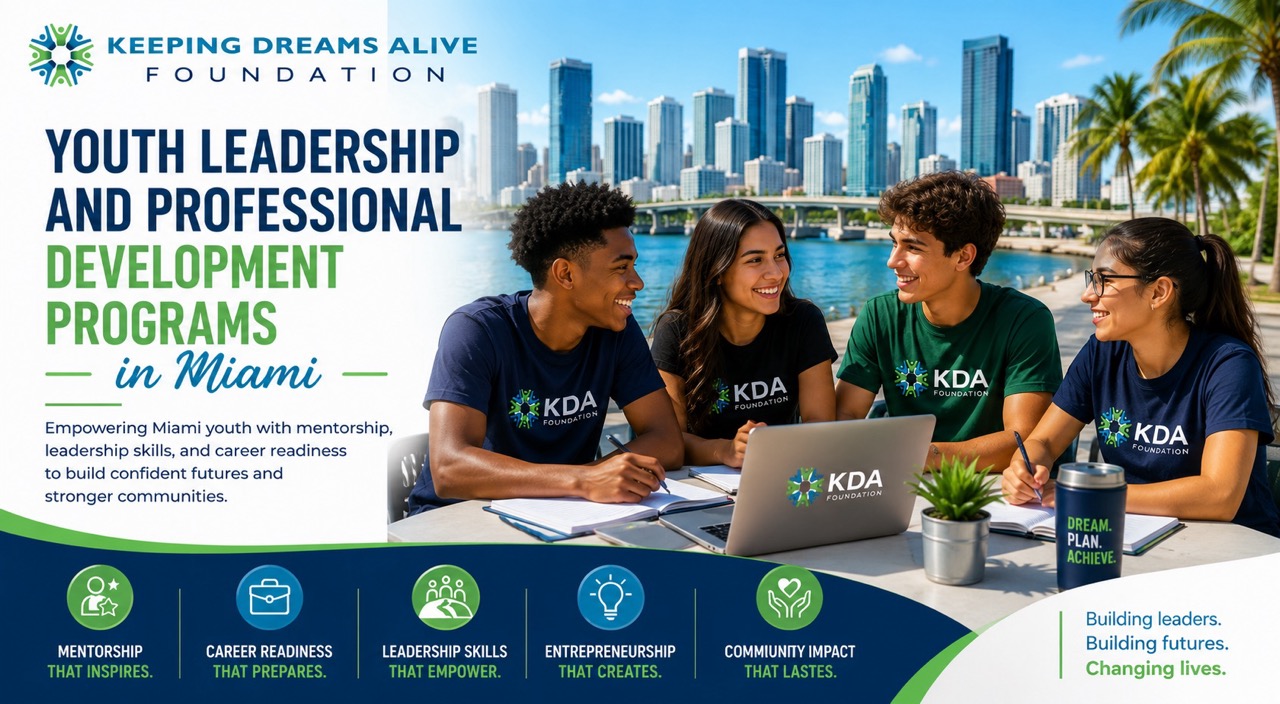
Technology and Social Media Influence Student Development
Teenagers today navigate environments shaped heavily by smartphones, social media pressure, digital distraction, and constant online comparison. Many students spend large portions of their day connected to platforms that influence confidence, communication habits, focus, and long-term planning.
KDA Foundation understands that Miami youth mentorship & leadership training should address these realities directly rather than ignoring them. Effective mentorship helps students build healthier routines, improve self-awareness, and strengthen communication skills that support personal and professional growth. Students often struggle with social comparison, reduced face-to-face communication confidence, inconsistent focus, and unrealistic expectations surrounding success and identity.
Structured mentorship teaches students how to manage distractions while reinforcing healthier leadership habits and balanced decision-making. KDA Foundation encourages students to connect daily choices with future opportunities while helping them understand how communication, discipline, and confidence influence long-term development. Strong mentorship creates practical systems that support healthier growth in modern digital environments.
Community-Based Leadership Programs Create Lasting Impact
Youth development influences entire communities, not only individual students. Teenagers who strengthen communication, accountability, leadership, and confidence often contribute more positively within schools, neighborhoods, workplaces, and peer groups. KDA Foundation views community engagement as an important part of mentorship because leadership grows through interaction, teamwork, and responsibility.
Miami youth mentorship & leadership training encourages students to participate in collaborative activities, volunteer opportunities, and community-centered experiences that strengthen interpersonal communication and social awareness. Community-based youth programs may help reduce low confidence, academic disengagement, social isolation, poor communication habits, and uncertainty about future direction.
Students connected to supportive mentorship systems frequently demonstrate stronger resilience during stressful transitions into adulthood. KDA Foundation helps students understand that leadership involves serving others, communicating respectfully, and contributing positively to their communities. According to Youth.gov, mentorship and experiential learning programs can improve educational and workforce outcomes for young people.
Career Readiness Requires More Than Academic Performance
Strong grades alone do not guarantee long-term success. Employers increasingly evaluate communication ability, professionalism, adaptability, and emotional maturity alongside academic qualifications. Many students graduate without understanding how workplace environments function or how leadership habits influence future opportunities.
KDA Foundation helps students develop practical skills that support long-term growth. Miami youth mentorship & leadership training introduces students to real-world experiences before they enter college, internships, or employment settings. Students benefit from learning:
- Professional communication: Students learn email etiquette, interview preparation, respectful conversation, and workplace interaction standards. These skills help them communicate clearly with mentors, teachers, employers, coworkers, and future professional contacts in real settings.
- Time organization: Students practice balancing schoolwork, activities, deadlines, leadership responsibilities, and future work commitments. Strong time organization helps them stay focused, reduce stress, manage priorities, and prepare for college, internships, or employment.
- Personal accountability: Mentorship helps students understand how daily choices shape trust, reputation, and future opportunity. Accountability teaches them to follow through, accept responsibility, improve habits, and stay consistent with personal and academic goals.
- Networking behavior: Students learn how professional relationships can support internships, recommendations, mentorship access, and career advancement. Strong networking behavior helps them introduce themselves confidently, ask thoughtful questions, and maintain respectful communication over time.
Leadership Growth Looks Different for Every Student
Every student develops leadership skills differently because teenagers enter mentorship programs with different personalities, strengths, communication styles, and goals. Some students communicate confidently yet struggle with organization or accountability. Others perform well academically but hesitate during public speaking or collaborative leadership situations.
KDA Foundation approaches mentorship from an individualized perspective because Miami youth mentorship & leadership training should adapt to varying student needs instead of using one fixed structure for everyone. Effective mentorship systems may focus on communication practice, accountability support, career exploration, teamwork activities, networking opportunities, scheduling guidance, or advanced leadership responsibilities, depending on the student’s development stage.
KDA Foundation encourages gradual progress because leadership confidence often grows through repeated practice and consistent support over time. Programs that recognize individual growth patterns usually maintain stronger long-term engagement among students and families while helping young people develop leadership habits that feel practical and sustainable within everyday life.
FAQs About Miami Youth Mentorship & Leadership Training
- What age groups benefit from youth mentorship programs?
Most programs support teenagers and young adults between ages 13 and 24, depending on mentorship structure and leadership development goals. - What does Miami youth mentorship & leadership training teach?
Programs often teach communication, accountability, teamwork, professionalism, leadership skills, career readiness, and personal development strategies. - How does mentorship help students build confidence?
Mentorship provides accountability, encouragement, guidance, and real-world exposure that help students strengthen communication and leadership confidence. - Do leadership programs only focus on academic success?
No. Many programs also support emotional growth, entrepreneurship, teamwork, communication, and practical workforce readiness. - Why do parents enroll teenagers in mentorship programs?
Parents often want structured environments that strengthen leadership habits, responsibility, communication skills, and long-term career preparation. - Can shy students benefit from leadership training?
Yes. Structured mentorship and collaborative activities often help shy students improve communication confidence gradually over time. - How long does leadership development usually take?
Leadership growth develops through repeated practice, accountability systems, mentorship consistency, and real-world experiences over time. - What industries do career readiness programs explore?
Programs may introduce healthcare, business, technology, entrepreneurship, skilled trades, creative industries, and community leadership opportunities. - How does Miami youth mentorship & leadership training differ from school activities?
These programs usually focus on mentorship, accountability, leadership exposure, and workforce readiness beyond traditional classroom instruction. - What should families look for in a youth mentorship organization?
Families should evaluate mentorship consistency, communication quality, accountability systems, leadership structure, and long-term student support opportunities.
Take the Next Step Toward Youth Success in Miami
Every young person deserves a clear path forward. Miami Youth Mentorship & Leadership Training: Empowering the Next Generation provides that path through structure, mentorship, and real-world preparation. KDA Foundation continues to support students across Miami by building confidence, leadership, and career readiness.
Families, educators, and businesses can play a role in shaping the next generation. Strong mentorship programs create lasting impact, not just for individuals but for entire communities. Contact KDA Foundation today to learn more about programs and enrollment opportunities.
Address: Coral Springs, Florida
Phone: (954) 775-8255
Email: [email protected]